
The Short Answer
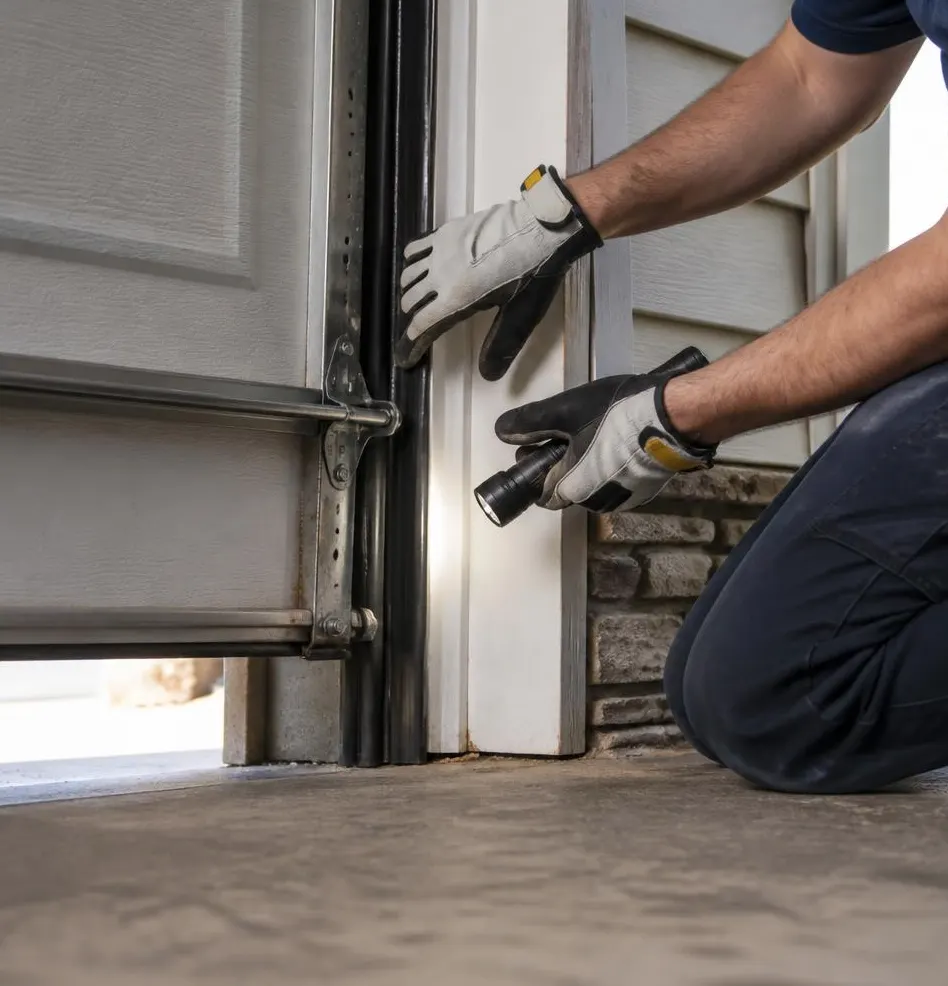
Grinding usually means metal is wearing against metal somewhere in the roller or bearing system. Squealing means something that should be lubricated isn't, or a part has worn past the point lubrication can help. Popping points to a spring or cable under stress, which is the one noise worth taking seriously right away. Rattling is almost always loose hardware or a part with too much play in the track. Here's how a technician works through each one, in the order they'd actually check it.
Grinding: A Deep, Mechanical Scraping Sound
Grinding shows up as a low, heavy noise that tracks with the door's movement — worse as it speeds up, quieter when it slows near the top or bottom. It's a sign of friction where there shouldn't be any.
- Rollers first. A technician checks the rollers for flat spots or cracked nylon. Cold weather makes this worse, since the plastic in older rollers stiffens and can develop flat edges that thump and grind as they roll.
- Roller bearings next. If the roller itself looks fine, the bearing inside it may have seized or rusted, forcing the roller to drag instead of spin.
- Track alignment. A bent or misaligned track will force rollers to grind against the track's edge instead of sitting inside it cleanly.
- Opener gears last. If the noise only happens near the opener and not along the track, worn gears inside the opener unit are the likely source.
The fix depends on where the problem is: rollers are a straightforward swap, bent track needs to be reset or replaced, and worn opener gears usually point toward opener repair rather than a quick adjustment.
Squealing: A High-Pitched Rubbing Sound
Squealing is friction's early warning sign, before it becomes grinding. It's common here in winter, when dry air pulls moisture out of lubricants faster than homeowners expect, leaving metal parts running dry.
- Lubrication is checked first — hinges, rollers, and the springs themselves. This is the cheapest and most common cause, and often the fix is as simple as a proper lubrication pass with the right product (not household oil, which attracts dust and grit).
- Worn rollers come next, especially nylon rollers that have worn down enough to expose the metal core.
- Bearings are checked the same way as with grinding — if lubrication doesn't quiet things down, a seized bearing is the next suspect.
- Opener chain or belt tension is checked last. A chain that's too loose can slap and squeal against its guide.
If lubrication fixes it, that's the whole job. If the squeal comes back within weeks, it's usually a part that's too worn to help with oil alone.
Popping: A Sudden Bang, Crack, or Snap
Popping is the noise that gets homeowners calling right away, and for good reason — it's often the spring system telling you it's under more stress than it can handle.
- Torsion springs are checked first. A spring nearing the end of its life can pop or crack as it cycles, especially with the sharp day-to-night temperature swings typical here, which cause the metal to contract and flex more than usual. A spring that's audibly popping is close to failing, not something to wait on.
- Cables are checked next for fraying or slipping off their drum, which can cause a sharp snapping sound under load.
- Loose hardware — hinges, brackets, or the bolts holding the track — is checked third, since a bolt working its way loose can pop audibly each time the door flexes.
- Panel flex is the last check, particularly on older steel doors that expand and contract with the day's temperature swing and can pop at the seams.
Spring-related popping is the one case where it's worth stopping use of the door until it's inspected. A broken torsion spring under tension can cause real injury, and it's not a DIY repair.
Rattling: A Loose, Shaking Noise
Rattling tends to show up as a general shake through the whole door rather than one clear point of noise.
- Hardware is checked first — nuts, bolts, and hinges loosen naturally over thousands of cycles, and this is the most common rattling cause by far.
- Roller fit in the track is checked next; a worn roller with too much play will knock against the track sides.
- Opener chain or belt tension is checked third — a chain-drive opener with a loose chain will slap audibly against the rail.
- Track brackets are checked last, especially after hail season, since dents or shifted brackets can throw off alignment enough to cause ongoing rattling.
Most rattling fixes are quick — tightening hardware and adjusting chain tension can often be done in one visit, though a track that's been knocked out of alignment may need resetting.
When to Call American Fork Door & Opener
A squeal that clears up with lubrication isn't an emergency, but popping, grinding that's gotten noticeably louder, or a door that's started to feel heavy or uneven should get a real look. If it sounds like spring trouble, our Spring Replacement service handles it safely, with the door properly secured before anything is touched. For noises that come and go, or if you just want everything checked before winter puts more stress on moving parts, our Preventive Maintenance visit covers lubrication, hardware, rollers, and alignment in one pass.
If you're hearing something off from your garage door in American Fork, Lehi, Pleasant Grove, Highland, Alpine, Cedar Hills, Lindon, or Orem, give American Fork Door & Opener a call — we'll figure out what the noise actually means before it turns into a bigger repair.